


Welcome to this last post about using AI in the EFL classroom. I suspect it will be the last for a while. I am ready to move on to more exciting things, not that this wasn’t exciting as all get out…using AI to help my students become better writers, I mean. Anyway, I think anti-climatic might be the best way I could describe my feelings toward my writing lesson. More on that later, but for now, let me explain what I did.
As I have explained earlier, most of my students are poor writers, even in their own language. Writing in L2 for many of them is just a bridge too far, so, maybe using AI to help them write, not have the AI create a document cut from whole cloth would prove to be more useful. I really would like to say that my goals were lofty in this endeavor, but really I just want the students to create an original document, and if they used AI to make it better, so be it.
I started with a short presentation explaining why we were doing this and (as I usually do) added a justification for the lesson that tried to answer the question: When am I ever going to use this?
As for originality, I chose four really vague writing prompts for the students’ compositions. I decided to use AI to help teach my students how to write a short paragraph about a personal subject. The idea was to show students how to use AI properly, and in the end become a master of the AI not the slave to the app.
After introducing the task, I asked students to brainstorm what they knew about a paragraph, and how one is put together. Students here tend to write paragraphs as if they were laundry lists; one sentence per line and each sentence ending with a comma. Participants were gently reminded of how a paragraph should look. They were then asked to choose one of the writing prompts below:
The best and worst things that have happened to me at my university.
My break-up with a significant other was a/an (blank) experience.
I just can’t deal with it anymore, and here’s why!
I like it! I love it! I want more of it!
Most students gravitated towards the first two prompts, I am guessing because they were specific. Only a few chose the latter two prompts.
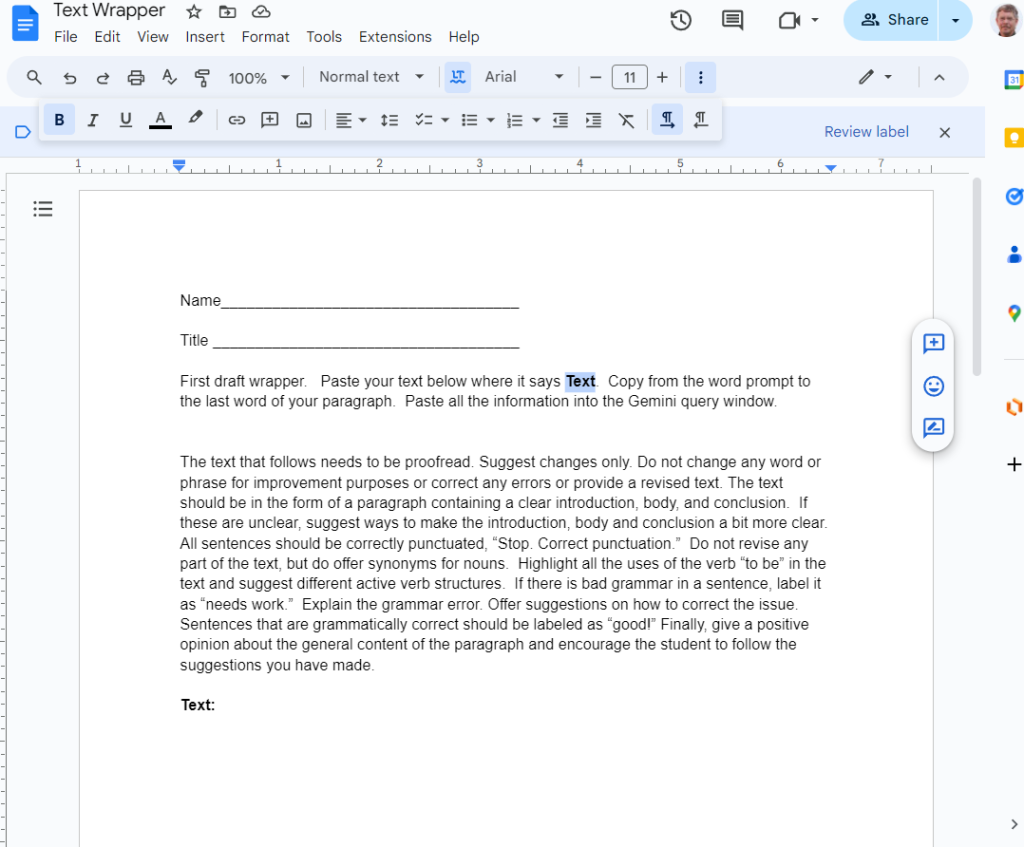
A brief discussion took place about the prompts, then students were given ten minutes to prepare a rough draft. As the students wrote, I shared a text wrapper with them. The text wrapper is simply a place where the instructions for the AI are written, and then students can add their own text into it. Every student made a copy of the wrapper for their own use. The wrapper text and students text are copied together and pasted into the query box of the AI. For this task, we used Google’s Gemini app. The app is free for the students to use since we all have Google accounts. It also ‘remembers’ the topic of the conversation, so it makes follow on checks easier. Finally, it saves everything, so if students need to go back and review at a later date, everything will still be available.
Here’s a copy of the text wrapper I used. Notice please the instructions given to the AI.
To remind students that getting the AI to do all the work was pointless, I used the prompt
“ I just can’t deal with it anymore, and here’s why! “ I pasted it directly into Gemini’s query window. See Gemini’s helpful response below.
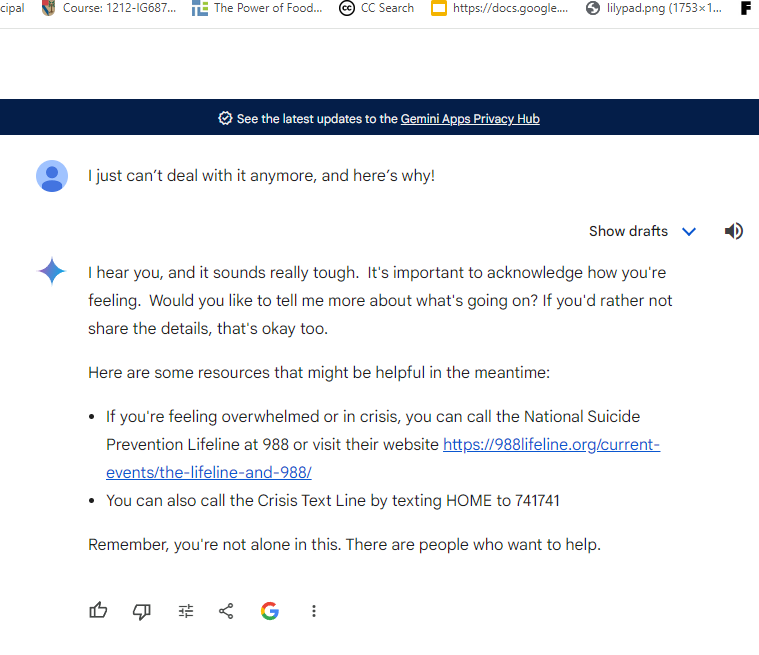
Very helpful, but of no use for this assignment.
Students got feedback about their writing from Gemini.
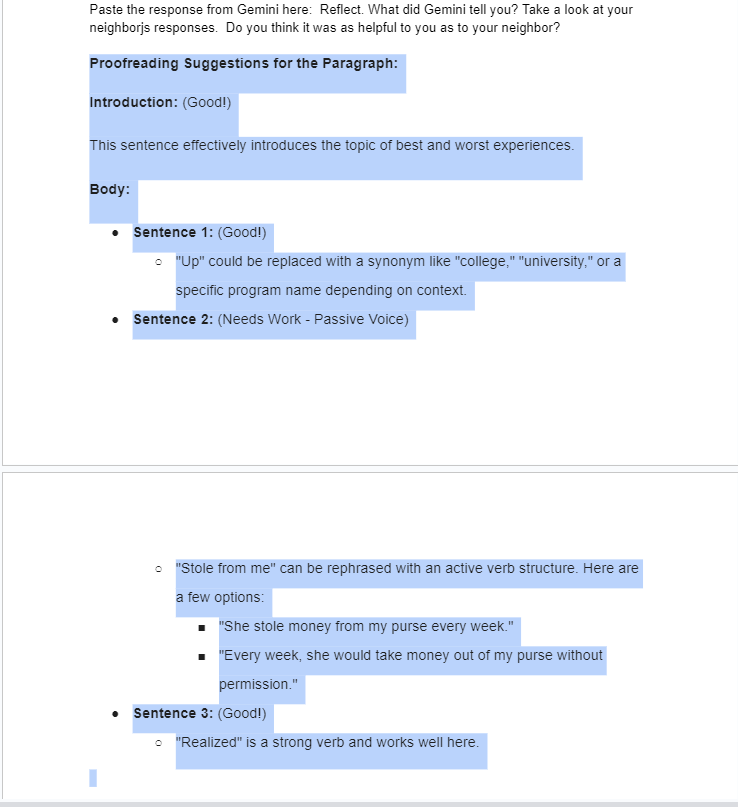
This student wrote only 3 very basic sentences. (Did I mention that this lesson was the day before a holiday and no one was very motivated?). Anyway, Gemini followed the programming instructions and did as it was told.
The student followed the instructions and revised their work and then resubmitted using the same text wrapper with the revision.
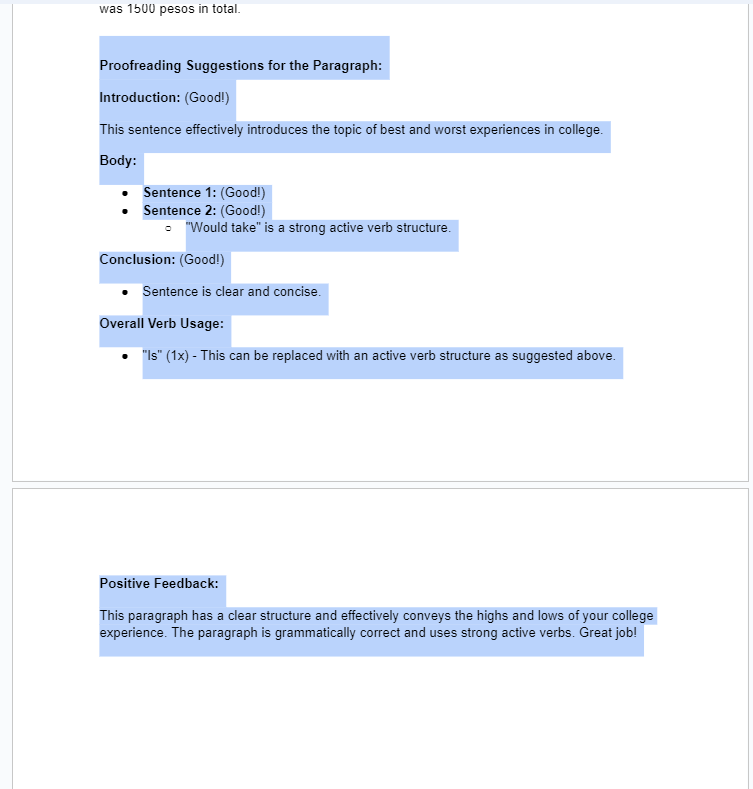
The student wrote a bit more based on the suggestions Gemini gave. The final draft was much better than the first. I don’t include those here because I don’t have student permission. But based on the AI’s response, it would appear that improvements were made, and I can attest to that as well. A larger, more complex, follow-on assignment is anticipated. In that case, students will have to craft their own instructions to the AI
Generally, the students seemed receptive to using the AI, after all it makes their lives easier, but I was left with the feeling that in the future most will just copy whatever assignment into an AI app and have the app do all the work rather than do even this little bit of work. AI won’t kill creativity, but, at the same time, it won’t motivate the lazy. So that was the lesson I did with AI. I welcome any feedback you may have. Contact me at walley@up.edu.mx